Why Homeschool?
The first step to homeschooling is making your decision to home educate your child. It is important to become informed and knowledgeable about some of the main concerns you may have. Explore these areas of our website to learn more about the initial decision to homeschool.
Making Your Decision
The reasons people decide to educate their children at home are varied and can be unique to each family. Some look towards a better educational experience, others are concerned with moral and social issues, some are concerned with safety, and still others have special needs that they wish to address. Explore these reasons and others that have led families to homeschooling.
Advantages
Ask anyone who loves homeschooling what the advantages are, and you'll probably hear a long list of the benefits of educating children in the home. Homeschooling is a journey and an adventure, with benefits and rewards for the entire family. Come find out what these advantages are and decide if homeschooling is right for you.
Teaching Your Own
Are you qualified to teach your own children? The answer is yes! It is challenging, but rewarding, to educate your children in your home. Find out what these challenges are and how to address them.
Socialization
"But what about socialization?" So the typical question goes to anyone who homeschools. Find out what socialization means to homeschooling families and strategies to engage your children and your entire family in social activities and connections.
Research & Statistics
Learn about current research and statistics involving homeschooling families, the homeschool movement, and the educational system.
Public School Issues
Many parents are basing part of their decision to homeschool on issues with public schooling, from bullying to poor academic performance to problems with governmental control.
Community Outreach
Want to help homeschooling integrate into the community at large? Are you a homeschool group leader who talks with the media or provides information to new and curious homeschoolers? Here are tips to help you present homeschooling to the public and the media.
What's Popular
The Privacy Advantages of Homeschooling
This academic paper exposes the expansion of information gathering and dissemination via the United States public school system and facilitates parental choices on how best to educate their children if privacy issues are a concern. Privacy is fundamentally the omission of outside interference; therefore, in attempting to demonstrate the privacy advantages of homeschooling, this work, for the most part, proves a negative by comparatively cataloging how much privacy is denied, or potential...
Should I Home School?: How to Decide What's Right for You & Your Child
Have questions about homeschooling? This book has the answers. The information in this book will help you decide if homeschooling is right for you and your child. 
Homeschoolers and Public Libraries: A Synergistic Relationship
Homeschoolers are commonly heavy users of their local libraries. Libraries can become educational hubs for homeschoolers by providing programming, information, and events. Homeschoolers can help libraries by advocating for libraries and urging lawmakers to support these vital institutions in their communities.
Why Do People Homeschool?
Excellent education, dedicated teachers with a great teacher-to-student ratio, education tailored to the specific child, integrated education, and better teaching materials are some the reasons that make home education the best choice for your child and your family. 
The Benefits of Homeschooling: Top Ten Reasons for Homeschooling
Homeschoolers are often asked about why they homeschool. This veteran homeschoolers has come up with her top ten reasons for homeschooling: education, freedom, family and love, morals and values, independence, socialization, health, passion, creativity and imagination, and play.
10 Honest Reasons Parents Choose to Homeschool and the Politically Correct Defense We Hide Behind
There are so many reasons to homeschool. Is everyone's reason different or are there common reasons we homeschool? While there are lots of answers to smooth over any uncomfortable probing questions from strangers and sometimes family, these reasons are honest reflections of the choices of homeschooling family. 
55 Serious Reasons Why You Should Homeschool
Here are dozens of reasons why you should homeschool. Families and teachers worldwide have been convinced that government controlled schools are “better” for children, but this is often not the case. Homeschooling is the best approach to improving quality of life in all aspects of the home and family. 
An Open Letter to My Non-Homeschooling Friends
It can be difficult for friends to understand the changes and challenges a homeschooling family faces. This mom shares her reasons for homeschooling and why her relationship with them is different now.
Nobel Prize Winners' Achievements Don't Prove School Is Good for Learners
One of the most laughable defenses of the government-operated school system, sure to come from the keyboard of hundreds of people who participate in on-line discussion of education policy, is the notion that Nobel Prize winners and other eminent persons prove the effectiveness of our school system. Well, what do the Nobel Prize winners themselves have to say about this? This articles includes some quotations by or about Nobel Prize winners, describing their views of school.
State Laws Concerning Participation of Homeschool Students in Public School Activities
This is a list of states that have addressed issues of homeschooler participation in public school classes, sports, activities, etc.
Why do some people choose to homeschool their kids?
More and more American parents are choosing to educate their children at home. What accounts for this trend? Reasons include faith preferences, the individual approach to education, and a desire for a stronger family unit. 
Home-Schooling: Socialization not a problem
One of the most persistent criticisms of home-schooling is the accusation that home-schoolers will not be able to fully participate in society because they lack “socialization.” It’s a challenge that reaches right to the heart of home-schooling, because if a child isn’t properly socialized, how will that child be able to contribute to society? Home-school families across the nation knew criticisms about adequate socialization were ill-founded — they had the evidence right in their own homes. In ...
Research Facts on Homeschooling
A summary look at research facts on homeschooling including: general facts and trends, reasons for home educating, academic performance, social, emotional, and psychological development, success in adulthood, and overall success.
Parents, Are You Ready To Teach Your Kids Arithmetic?
Parents are starting to realize that "fuzzy" math courses (variously called "whole math," "new math" or "new new math") are producing kids who can't do arithmetic, much less algebra. The U.S. Department of Education responded last October by officially endorsing ten new math courses for grades K-12, calling them "exemplary" or "promising" and urging local school districts to "seriously consider" adopting one of them. The recommended programs were approved by an "expert" panel commissioned by...
7 Tips to Help Explain Your Homeschool Decision with Confidence
Many homeschoolers are confronted with negativity. Heated debates on public education, religion and politics can be incited. Facing arguments on socialization, teacher qualifications and homework are not uncommon. There will always be naysayers. You simply cannot please everyone all the time, especially when you make important family decisions. It is best to convey your decision with confidence and let the act of homeschooling tell the rest of the tale.
Resources
A Different Kind of Teacher: Solving the Crisis of American Schooling
In 1991, shortly after receiving both the New York State and New York City Teacher of the Year Awards, John Gatto resigned to begin a new career as an education reform advocate. In this collection of 16 essays, Gatto analyzes the problems of American education and suggests solutions for revitalizing the system — prescriptions that run counter to current trends.
Homeschool Bravely: How to Squash Doubt, Trust God, and Teach Your Child with Confidence

It's time to change your perspective to transform the way you plan, teach, and homeschool. This book helps you to see homeschooling as a calling. With this mindset, you'll be able to dismiss the stress of impossible expectations. Find strategies to help you juggle the logistics of homeschooling with different ages, be a good support for a struggling learner, set realistic goals, dismiss the guilt, and weather any criticism. You can be a hopeful homeschooler! God uses all for good and can transform all of your stress, fears, shortcomings, and successes to create the best plans for your family. 

They're Your Kids: An Inspirational Journey from Self-Doubter to Home School Advocate

For many people, their schooling was uncomfortable, tedious, and sometimes a waste of time and energy. This book offers the idea that the public school system is tragically flawed and that we are able to do better for our own children. Sam Sorbo, mom of three and wife of actor Kevin Sorbo, took the leap into homeschooling and found the joy and success she was seeking. Included are strategies for working parents, those who are scared to take the leap, and anyone who wants the best for their children. 

The Homeschooling Revolution
A readable, scholarly overview of the modern day homeschooling movement. Includes vignettes from homeschooling families, war stories, research information, media reaction, footnotes, and statistics.
Taking Charge of Your Child's Education: A Guide to Becoming the Primary Influence in Your Child's Life

Every parent wants to give their child the best start in life. The best way to do that is to get fully involved in their educational process as their primary influence. This book is full of helpful information, resources, and tools that will lead you to home education success. Erica Arndt recognizes that the most important factor is the family unit relationships. This book will help you as you make your decision to homeschool. 

Should I Home School?: How to Decide What's Right for You & Your Child

Have questions about homeschooling? This book has the answers. The information in this book will help you decide if homeschooling is right for you and your child. 

The Exhausted School: Bending the Bars of Traditional Education
These 13 essays, presented at the 1993 National Grassroots Speakout on the Right to School Choice, illustrate how education reform actually works. Written by award-winning teachers and their students, these essays present successful teaching methods that work in both traditional and nontraditional classroom settings. “Gatto’s voice is strong and unique.” — Thomas Moore, author of Care of the Soul
Why We Homeschool

It is a common misconception that most parents homeschool due to bullies, school shootings, or bad teaching content. While these things are important, there is a higher purpose for choosing to home education your children. Even if all those things were corrected, there are stronger reasons to stay committed to the homeschool model. So why do you homeschool? This book looks at the meaning and significance of a true Christian education. 

But What About Socialization? Answering the Perpetual Home Schooling Question: A Review of the Literature
This book by Dr. Susan A. McDowell  uses research, statistics, and the experiences of homeschooling families to answer questions and counter myths about homeschooling and socialization. Read through a discussion of the multiple meanings of socialization, what parents, leaders, and children have to say about the issue, and what the research shows. 
Kingdom of Children : Culture and Controversy in the Homeschooling Movement (Princeton Studies in Cultural Sociology)

More than one million American children are schooled by their parents. As their ranks grow, home schoolers are making headlines by winning national spelling bees and excelling at elite universities. The few studies conducted suggest that homeschooled children are academically successful and remarkably well socialized. Yet we still know little about this alternative to one of society's most fundamental institutions. Beyond a vague notion of children reading around the kitchen table, we don't know what home schooling looks like from the inside.

Sociologist Mitchell Stevens goes behind the scenes of the homeschool movement and into the homes and meetings of home schoolers. What he finds are two very different kinds of home education--one rooted in the liberal alternative school movement of the 1960s and 1970s and one stemming from the Christian day school movement of the same era. Stevens explains how this dual history shapes the meaning and practice of home schooling today. In the process, he introduces us to an unlikely mix of parents (including fundamentalist Protestants, pagans, naturalists, and educational radicals) and notes the core values on which they agree: the sanctity of childhood and the primacy of family in the face of a highly competitive, bureaucratized society.

Kingdom of Children aptly places home schoolers within longer traditions of American social activism. It reveals that home schooling is not a random collection of individuals but an elaborate social movement with its own celebrities, networks, and characteristic lifeways. Stevens shows how home schoolers have built their philosophical and religious convictions into the practical structure of the cause, and documents the political consequences of their success at doing so.

Ultimately, the history of home schooling serves as a parable about the organizational strategies of the progressive left and the religious right since the 1960s.Kingdom of Children shows what happens when progressive ideals meet conventional politics, demonstrates the extraordinary political capacity of conservative Protestantism, and explains the subtle ways in which cultural sensibility shapes social movement outcomes more generally.

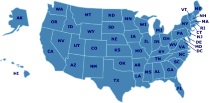
Looking for Another State?
Featured Resources

As an Amazon Associate, we earn from qualifying purchases. We get commissions for purchases made through links on this site.

Miserly Moms: Living on One Income in a Two-Income Economy
Save Thousands of Dollars a Year Jonni McCoy and her family are proof that you live on one income. The McCoys made a successful transition from two incomes to one while living in one of the most expensive parts of America: the San Francisco Bay Area...
Easy Grammar Systems
Easy Grammar Systems publishes the Easy Grammar and Daily Grams teaching texts for use through high school. Students use a “hands on” approach (deleting/marking) and learn correct usage and why that usage is appropriate. Review and using information ...
A Child's Story of America
This text reads like a story book more than a history textbook. This book has a decidedly Christian bent. Students are given a comprehensive overview of U.S. history from Columbus to the present. Review questions are included throughout, as well as h...
The Ultimate Book of Homeschooling Ideas: 500+ Fun and Creative Learning Activities for Kids Ages 3-12
Fun and Effective Home Learning Activities for Every SubjectAs a homeschooling parent, you're always looking for new and creative ways to teach your child the basics. Look no longer! Inside this innovative helper, you'll find kid-tested and parent-ap...
Maria Montessori: Her Life and Work
Maria Montessori is important background reading for parents considering Montessori education for their children, as well as for those training to become Montessori teachers. The first woman to win a degree as a Doctor of Medicine in Italy in 1896, M...